



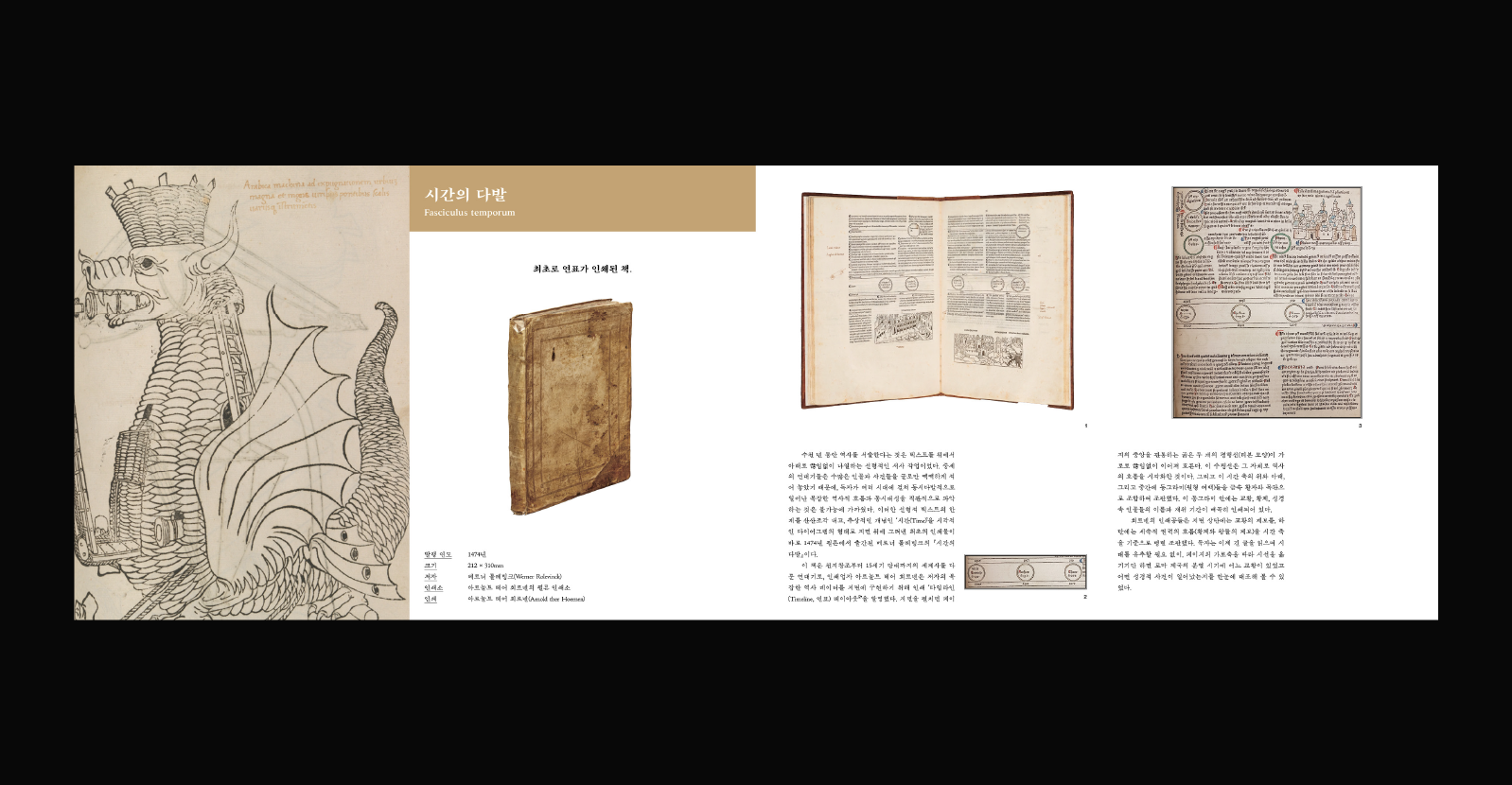
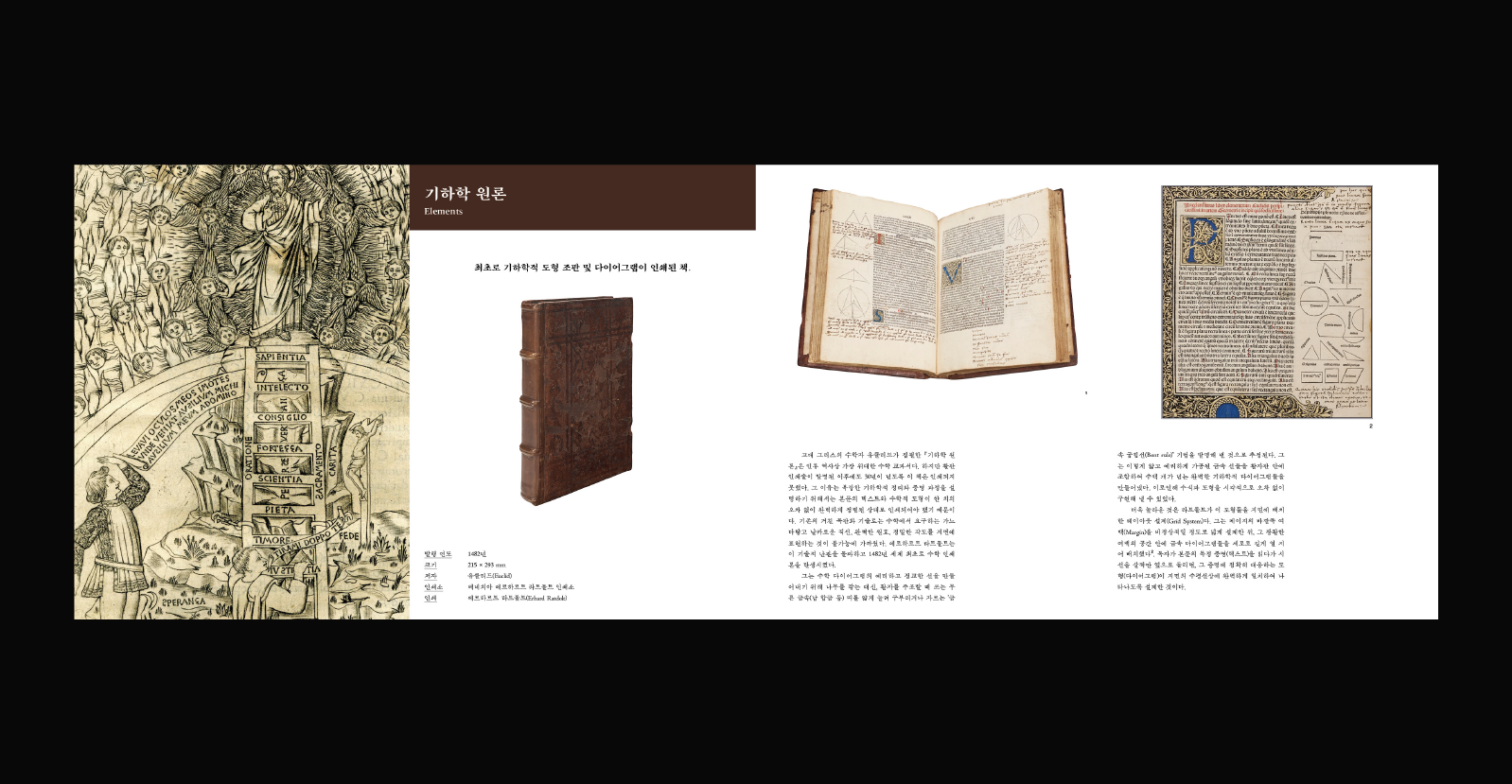
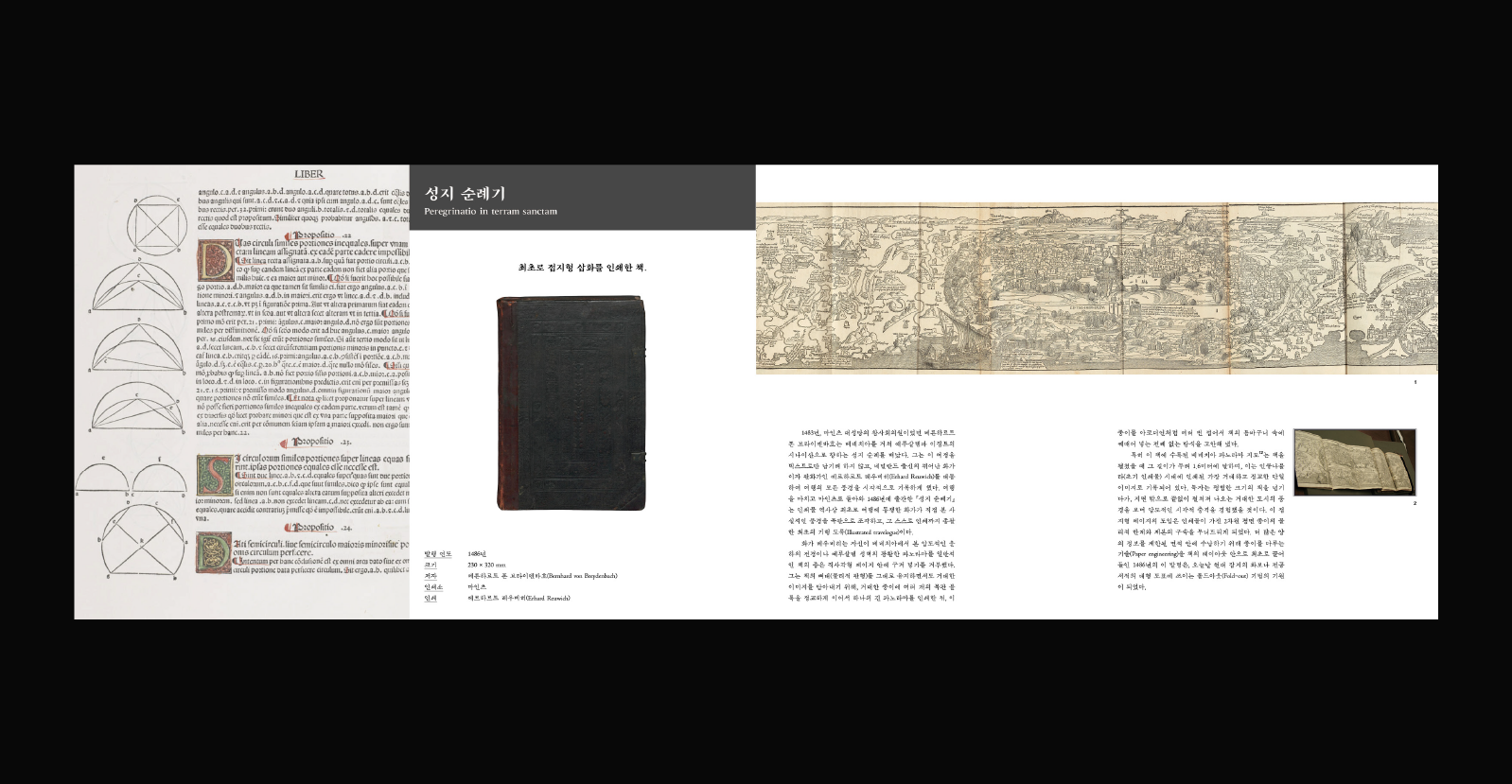
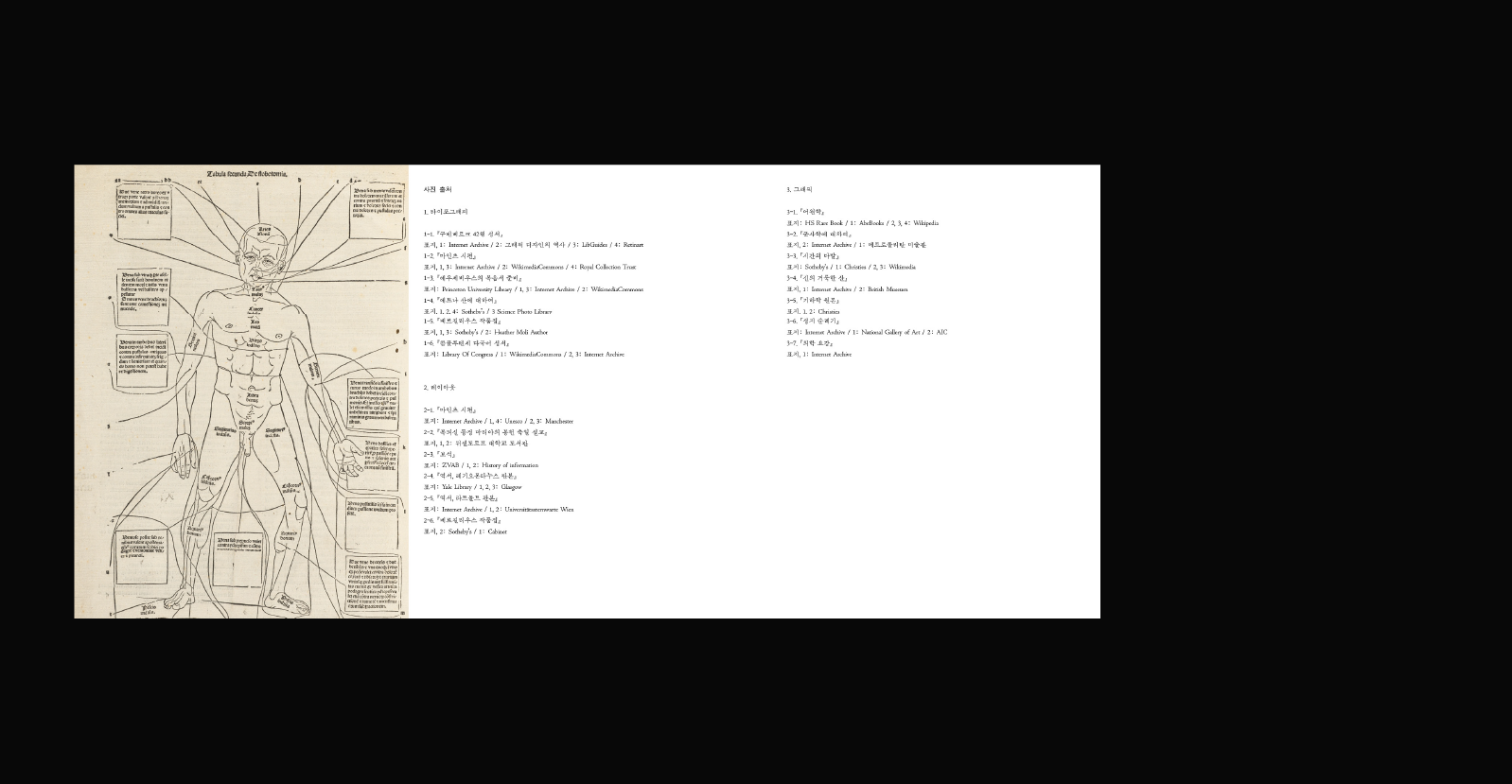


오늘날 지식을 담는 그릇인 책은 오랜 시간 수많은 실험을 거치며 지금의 형태를 갖추었다. 구텐베르크가 활판 인쇄술을 발명하기 전까지 유럽 전역에 존재하던 책은 약 1만 권 남짓에 불과했다. 그러나 인쇄술 발명 이후 초기 생산량은 800만에서 2,000만 권으로 급증했고, 1500년대에 이르러서는 1억에서 2억 권으로 폭발적으로 늘어나며 지식의 확산을 이끌었다.
당시 인쇄소 및 인쇄가들은 활자와 삽화를 통해 독자에게 지식을 어떻게 전달할 것인가를 두고 치열하게 고민했다. 지면 위에서 다양한 실험들이 이루어졌고, 놀랍게도 이 시기에 정립된 방식들 중 상당수는 수백 년이 지난 오늘날 우리가 보는 책에도 그대로 이어져 오고 있다.
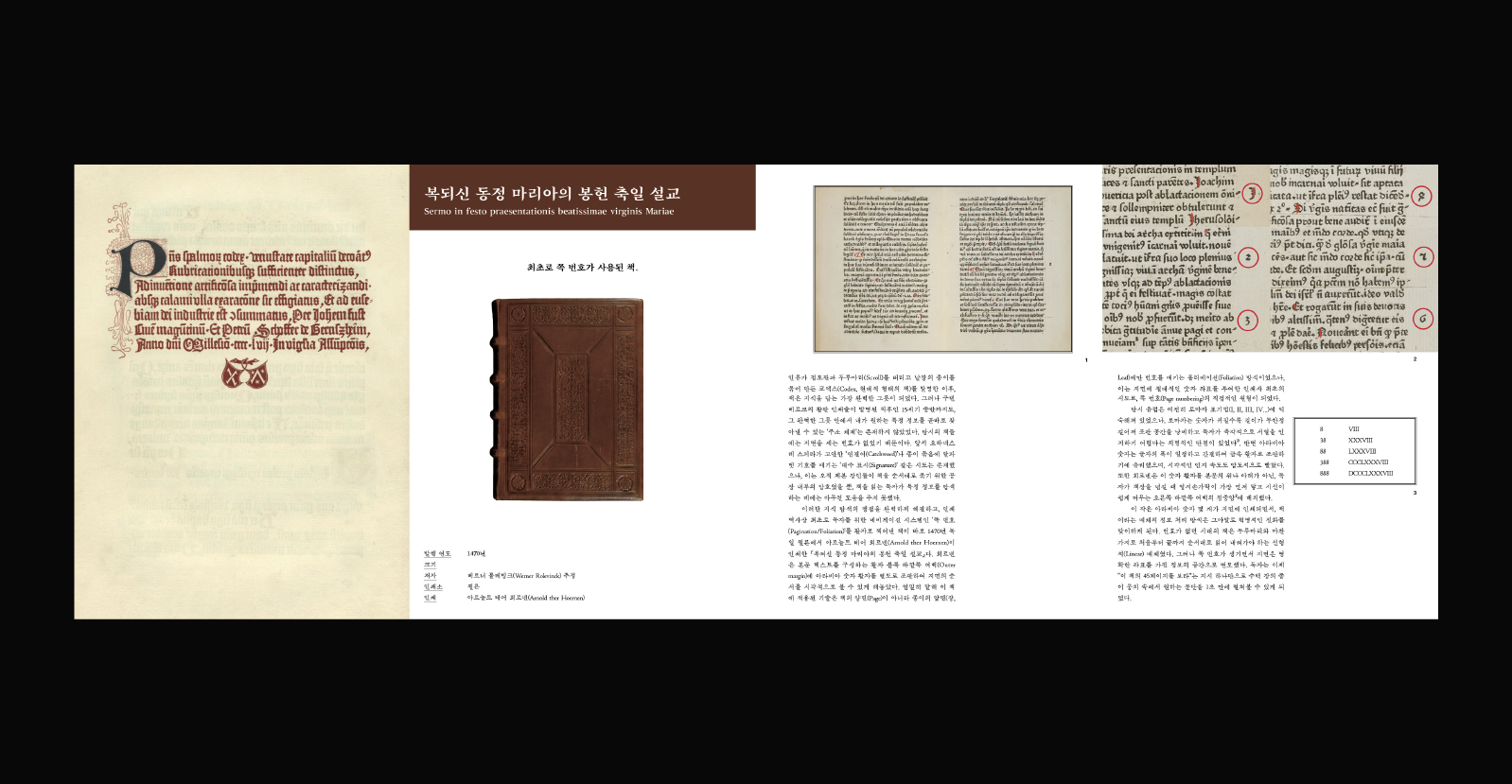
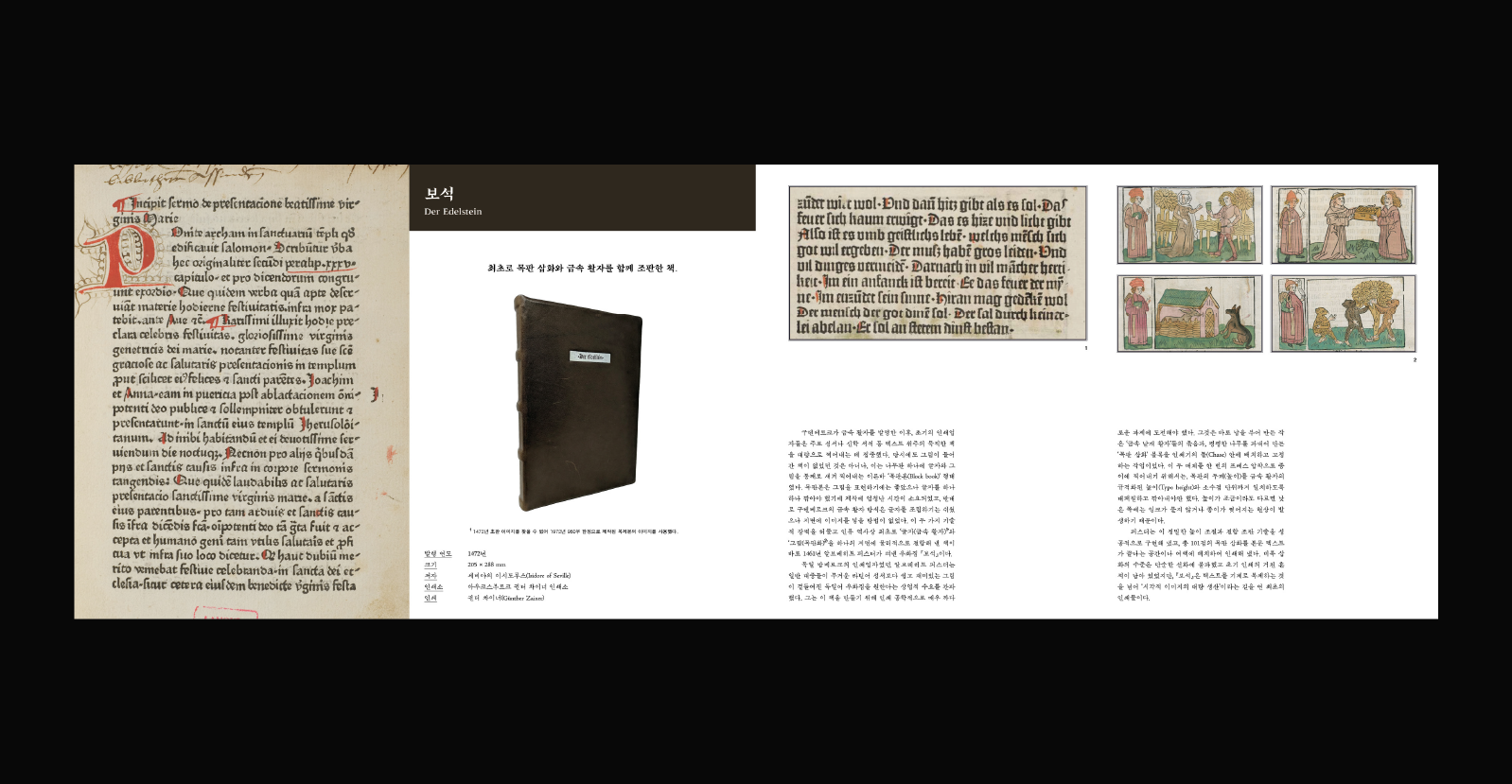
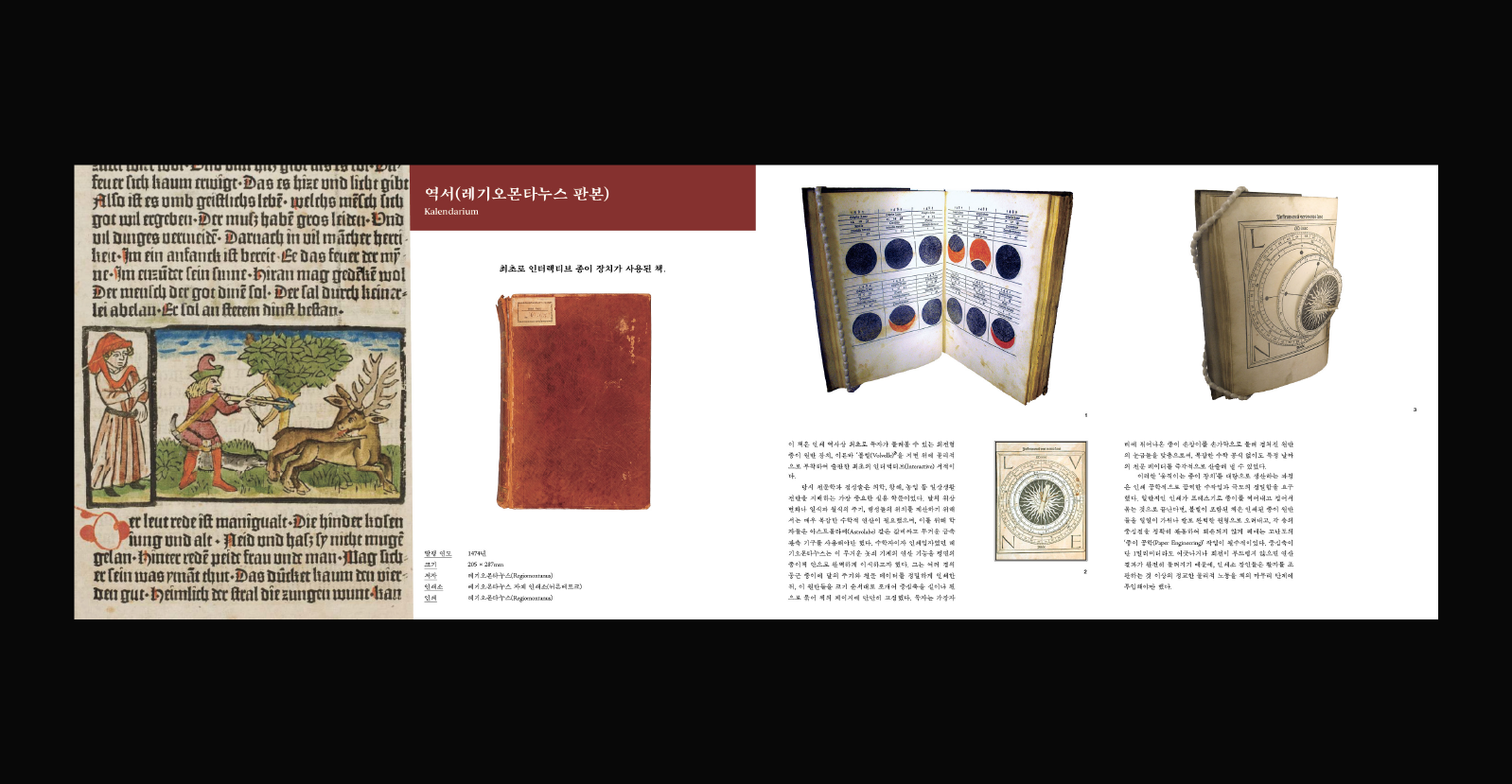
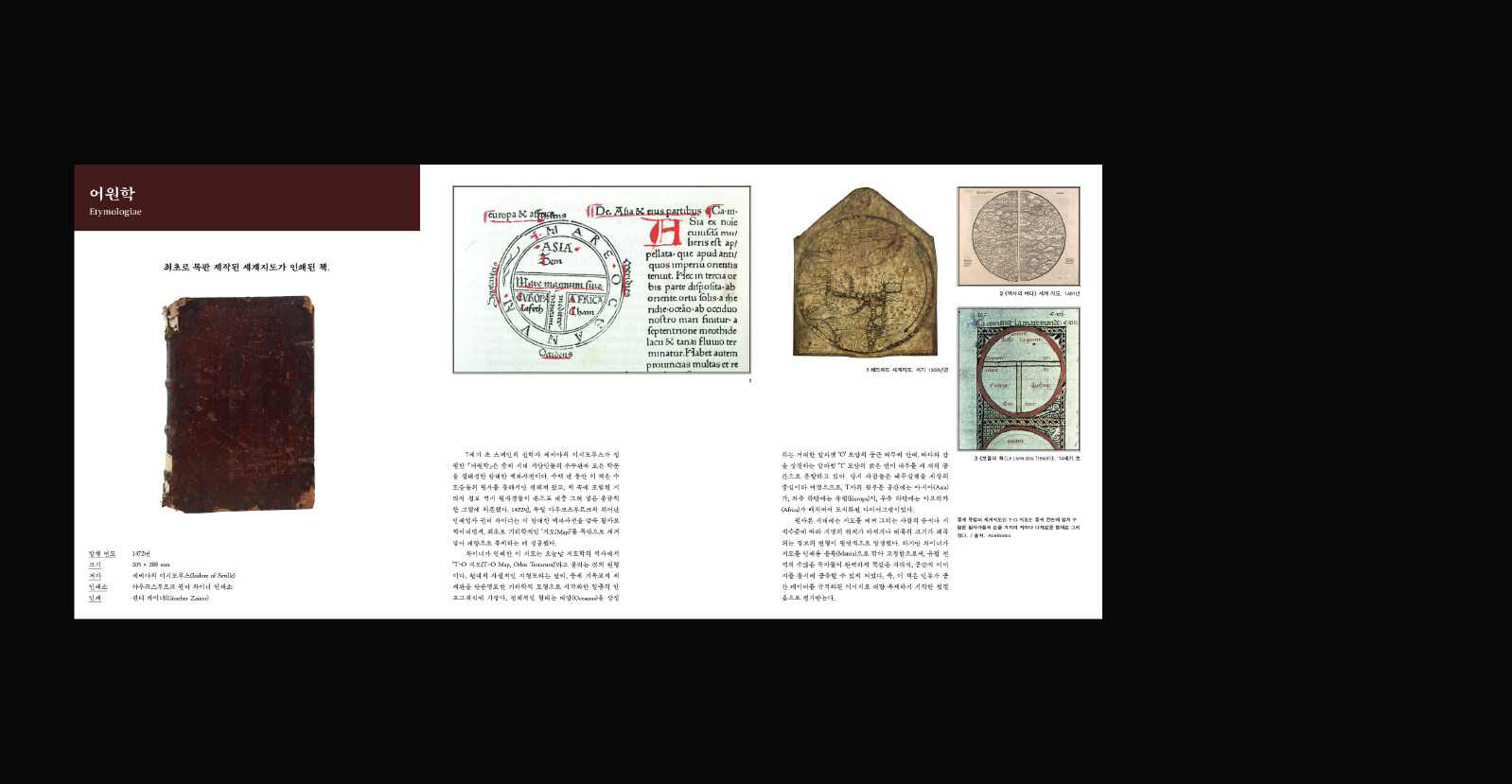
따라서 이 책에서는 활판 인쇄술이 발명된 1450년경부터 1500년경 사이에 출간된 초기 인쇄본들을 중심으로 지면 위에서 일어난 ‘최초의 시도’들을 조명하고자 한다. 서지학에서는 이 시기의 책들을 요람을 뜻하는 라틴어인 ‘인큐나뷸라(Incunabula)’라고 부른다. 책의 기초를 다지던 이 요람기를 좇아, 오늘날 익숙하게 접하는 책의 구조가 어떠한 배경과 필요에 의해 고안되었는지 그 뿌리를 살펴보려고 한다.
오늘날 책을 만드는 디자이너는 물론, 독자 모두에게 이러한 기원을 아는 것은 책이라는 매체를 이해하는데 도움을 줄 수 있는 지식이자 책이라는 매체를 즐기는데 더 좋은 소양이 될 것이라고 생각한다.
Books, the vessels of knowledge we know today, have evolved into their current form through countless experiments over a long period of time. Before the invention of the movable-type printing press, there were merely around 10,000 books in existence across the entirety of Europe. However, following this groundbreaking invention, initial production surged to between 8 and 20 million copies. By the 16th century, this number had exploded to between 100 and 200 million, driving an unprecedented dissemination of knowledge.
Printers and printing houses of the time deliberated fiercely over how best to convey knowledge to readers through typography and illustration. A multitude of experiments took place on the printed page, and remarkably, many of the conventions established during this era remain intact in the books we read today, centuries later.
Therefore, this book aims to shed light on the "first attempts" made on the page, focusing on early printed books published between 1450—around the dawn of the movable-type printing press—and 1500. In bibliography, books from this period are referred to as Incunabula, a Latin term meaning "cradle." By tracing back to this cradle period that laid the foundation of the book, we will explore the roots of the structures we are so familiar with today, uncovering the historical backgrounds and necessities that brought them into existence.
For today's book designers and readers alike, I believe that understanding these origins provides valuable insight into the medium of the book itself, enriching the overall experience of engaging with it.